Rabu, 26 Maret 2014

[N710.Ebook] Download PDF Mighty, Mighty: A Novel, by Wally Rudolph

Download PDF Mighty, Mighty: A Novel, by Wally Rudolph

Checking out, once again, will offer you something brand-new. Something that you do not know then revealed to be renowneded with the publication Mighty, Mighty: A Novel, By Wally Rudolph message. Some understanding or session that re obtained from checking out e-books is vast. More books Mighty, Mighty: A Novel, By Wally Rudolph you review, even more understanding you get, and also a lot more possibilities to constantly enjoy reviewing publications. As a result of this factor, reviewing book ought to be started from earlier. It is as what you could obtain from guide Mighty, Mighty: A Novel, By Wally Rudolph

Mighty, Mighty: A Novel, by Wally Rudolph

Mighty, Mighty: A Novel, by Wally Rudolph


Mighty, Mighty: A Novel, by Wally Rudolph

Download PDF Mighty, Mighty: A Novel, by Wally Rudolph

Mighty, Mighty: A Novel, By Wally Rudolph. Learning how to have reading habit resembles discovering how to try for consuming something that you actually don't want. It will certainly need more times to aid. Additionally, it will also little pressure to offer the food to your mouth as well as swallow it. Well, as checking out a book Mighty, Mighty: A Novel, By Wally Rudolph, sometimes, if you must check out something for your brand-new works, you will feel so woozy of it. Also it is a publication like Mighty, Mighty: A Novel, By Wally Rudolph; it will certainly make you feel so bad.

This publication Mighty, Mighty: A Novel, By Wally Rudolph deals you much better of life that could develop the quality of the life more vibrant. This Mighty, Mighty: A Novel, By Wally Rudolph is exactly what individuals currently require. You are here and you may be specific and also certain to get this book Mighty, Mighty: A Novel, By Wally Rudolph Never ever doubt to obtain it also this is just a book. You can get this publication Mighty, Mighty: A Novel, By Wally Rudolph as one of your collections. However, not the compilation to show in your bookshelves. This is a valuable book to be reading collection.

Just how is making certain that this Mighty, Mighty: A Novel, By Wally Rudolph will not shown in your bookshelves? This is a soft data book Mighty, Mighty: A Novel, By Wally Rudolph, so you can download Mighty, Mighty: A Novel, By Wally Rudolph by acquiring to obtain the soft documents. It will reduce you to review it every time you need. When you really feel careless to relocate the printed publication from home to workplace to some place, this soft data will reduce you not to do that. Due to the fact that you could only save the data in your computer unit as well as gizmo. So, it allows you review it anywhere you have readiness to review Mighty, Mighty: A Novel, By Wally Rudolph

Well, when else will certainly you locate this possibility to obtain this publication Mighty, Mighty: A Novel, By Wally Rudolph soft data? This is your good possibility to be here and get this great book Mighty, Mighty: A Novel, By Wally Rudolph Never ever leave this book before downloading this soft documents of Mighty, Mighty: A Novel, By Wally Rudolph in web link that we provide. Mighty, Mighty: A Novel, By Wally Rudolph will actually make a good deal to be your best friend in your lonely. It will certainly be the most effective companion to improve your company and also leisure activity.

Mighty, Mighty: A Novel, by Wally Rudolph

Mighty, Mighty is a modern day fable set in a crumbling metropolis riddled with urban poverty and violence. Dirty apartments, tattoo parlors, food kitchens – these are the markers of home for the struggling young adults around Chicago. Stefy is an artist at Ghost Town, the local tattoo shop, trying to provide for her younger sister Amanda and their ailing grandfather. Amanda is hoping for something better, seeking to escape a past riddled with addiction and an abusive relationship with Georgie. When he confronts her one drunken night at a dive bar, the situation turns violent: Amanda barely escapes with her life but Georgie lies dead on the bathroom floor. This one mistake puts the two sisters in the crosshairs of Georgie’s father, a twisted, corrupt ex-cop now out for revenge over the murder of his son. His quest for vengeance will make the neighborhoods of Chicago tremble, leaving no one untouched.

Mighty, Mighty is a harsh and realistic look at the struggle of two families desperately trying to get out from under the heavy boot of violence and poverty. Like the works of Richard Price and Dennis Lehane, the novel is a startling and accurate portrait of contemporary urban life

  • Sales Rank: #1574904 in Books
  • Published on: 2015-10-13
  • Original language: English
  • Number of items: 1
  • Dimensions: 8.10" h x .90" w x 5.40" l, .0 pounds
  • Binding: Paperback
  • 304 pages

Review
Praise for Mighty Mighty

"Like a fine tattoo artist blending blood and ink, Rudolph engraves portraits of complicated individuals onto the rough skin of Mighty, Mighty with no antiseptic — only the recalcitrant images of real people in pain . . . A masterful sophomore effort (following the success of Rudolph’s Four Corners), Mighty, Mighty is a love story of human detritus in concrete jungles, intricately inked into a scarred, yet majestic tattoo. Fans of Barry Hannah, Daniel Woodrell, Denis Johnson, and Pedro Juan Gutiérrez will find it hard to put this novel down."—Los Angeles Review of Books

"Mighty, Mighty is a gem: dark, hard, and filled with surprising beauty. It is also noir as hell, filled with the kind of people you always worried were down at that bar on the corner, waiting to turn on you." —Tod Goldberg, author of Gangsterland, Finalist for the 2014 Hammett Prize

"Mighty, Mighty is a hard-boiled hat trick of a novel: a searing family drama, a gripping crime thriller, and a raw, unflinching portrait of lives lived on America's violent edge." —Scott O'Connor, author of Half World and Untouchable

“Rudolph writes with personality, each page tattooing itself straight on your brain. Mighty Mighty has voice, that elusive, unteachable, and beautiful trait.” —Joshua Mohr, author of All This Life

 “Mighty Mighty lets it all hang out, a boldly affecting story written with flow and swagger, like the best hip-hop." —Mark Haskell Smith, author of Raw: A Love Story

 “A wild, violent ride of a page turner, Mighty, Mighty is also a thoughtful contemplation on how we love and grieve. A beautiful book that wears its messy, empathetic heart on its sleeve.” —Rob Roberge, author of The Cost of Living

Praise for Four Corners:

“Wally Rudolph's meth-and-cocaine-addled protagonists reel through a nonstop catastrophe of violence, flight, and revenge, too self-destructive to have anything more than a prayer--but they are real. They suffer and love and worship, however crazily. The action is urgent and compelling, the details are as crisp as the light that falls on Santa Fe. Wally knows the territory. And the territory is the human heart.” —Jack Butler, Pulitzer Prize Finalist for Living in Little Rock with Miss Little Rock

“Four Corners is a book that will stay with me for a long time, an outstanding first novel by a writer unafraid to scrape the crud off the floor of the human psyche. The best kind of crime fiction.” —Scott Phillips, author of The Ice Harvest and Hop Alley

"Rudolph means to stress that hard-luck people can be as hard to quit as hard drugs, and the tone the author gives Frank is appealingly flinty and worn...The strength of Frank’s voice…recalls down-and-out tales like Don Carpenter’s Hard Rain Falling or Daniel Woodrell’s Give Us a Kiss." —Kirkus

“...the plot is rendered in vivid, punch-drunk prose, colored by the cold, jaundiced sunlight of late December in the high desert, a land so imbued with harshness that even its snowflakes prick the flesh." —LA Weekly

About the Author
Wally Rudolph, born in Canada to Jamaican parents, had a fifteen-year affair with illicit drugs that had him drop out of college and took him back and forth across the American Midwest. His fiction can be found in the literary journals Milk Money, Lines+Stars, Palooka, Slush Pile, The Brooklyner, and the anthology, Literary:Pasadena. A graduate of The Second City Conservatory in Chicago, he now resides with his family in Los Angeles. As an actor, he has appeared in numerous films and TV shows including Street Kings, Bang Bang, and Sons of Anarchy. Rudolph is also the author of Four Corners.

Most helpful customer reviews

0 of 0 people found the following review helpful.
A mighty book about the power of hate, love, vengeance and family.
By Matilda
A mighty book set on the streets of a violent Chicago that for all it’s darkness leaves you believing in redemption (hopefully) as it explores the power of hate, love, vengeance and family ties.

We have a tattoo artist who does more free work covering up prison tattoos than commissions; a cop who lived by the "Chicago problems, Chicago solutions" motto dealing with grief and retirement; sisters, each struggling in their own way, trying to find a place in the world that’s less difficult; a priest running a shelter for those seeking a new life and redemption— all destined to collide.

This was one of those dark, violent, seedy books that no matter how much I might fear what happened next I couldn’t stop turning the page.

0 of 0 people found the following review helpful.
Great story + incredible characters = New favorite writer
By AllieBookZzZ
I finished Rudolph's Four Corners over the holidays and was excited to dig into this. To be honest, I didn't know what to expect as the book started, and I worried that it wasn't for me because it started from the perspective of an older cop, but then the story introduced these two sisters and...All I can say is that if you've ever had a sister (or even a brother) and had contentious relationship with them, this book will hit close to home. The way this book talks about family and grieving is the most realistic thing I've ever read. I found myself crying multiple times. But the story -- THE STORY IS CRAZY GOOD! I don't want to give anything away, but as soon as you think, you know what's going on...you don't :0

0 of 0 people found the following review helpful.
Best book of 2015
By Emily Ausbrook
Mighty Mighty was one of my favorite books of 2015. It has it all: relevance, romance, family, crime and redemption. Wally Rudolph has a unique and powerful voice, I love the way he develops characters while keeping you on the edge of your seat. Never a dull moment in Mighty Mighty.

See all 7 customer reviews...

Mighty, Mighty: A Novel, by Wally Rudolph PDF
Mighty, Mighty: A Novel, by Wally Rudolph EPub
Mighty, Mighty: A Novel, by Wally Rudolph Doc
Mighty, Mighty: A Novel, by Wally Rudolph iBooks
Mighty, Mighty: A Novel, by Wally Rudolph rtf
Mighty, Mighty: A Novel, by Wally Rudolph Mobipocket
Mighty, Mighty: A Novel, by Wally Rudolph Kindle

Mighty, Mighty: A Novel, by Wally Rudolph PDF

Mighty, Mighty: A Novel, by Wally Rudolph PDF

Mighty, Mighty: A Novel, by Wally Rudolph PDF

[H852.Ebook] Get Free Ebook The Billion Dollar Spy: A True Story of Cold War Espionage and Betrayal, by David E. Hoffman

Get Free Ebook The Billion Dollar Spy: A True Story of Cold War Espionage and Betrayal, by David E. Hoffman

Why should be publication The Billion Dollar Spy: A True Story Of Cold War Espionage And Betrayal, By David E. Hoffman Publication is one of the easy resources to seek. By getting the author and also theme to get, you can locate many titles that supply their information to obtain. As this The Billion Dollar Spy: A True Story Of Cold War Espionage And Betrayal, By David E. Hoffman, the motivating publication The Billion Dollar Spy: A True Story Of Cold War Espionage And Betrayal, By David E. Hoffman will certainly give you just what you have to cover the work target date. And why should remain in this web site? We will ask initially, have you a lot more times to opt for going shopping guides as well as search for the referred book The Billion Dollar Spy: A True Story Of Cold War Espionage And Betrayal, By David E. Hoffman in publication shop? Many individuals might not have adequate time to find it.

The Billion Dollar Spy: A True Story of Cold War Espionage and Betrayal, by David E. Hoffman

The Billion Dollar Spy: A True Story of Cold War Espionage and Betrayal, by David E. Hoffman


The Billion Dollar Spy: A True Story of Cold War Espionage and Betrayal, by David E. Hoffman

Get Free Ebook The Billion Dollar Spy: A True Story of Cold War Espionage and Betrayal, by David E. Hoffman

The Billion Dollar Spy: A True Story Of Cold War Espionage And Betrayal, By David E. Hoffman. Adjustment your practice to put up or squander the time to just talk with your close friends. It is done by your everyday, don't you feel tired? Currently, we will certainly reveal you the extra habit that, actually it's a very old habit to do that can make your life more certified. When feeling tired of always chatting with your friends all downtime, you could discover guide qualify The Billion Dollar Spy: A True Story Of Cold War Espionage And Betrayal, By David E. Hoffman and after that review it.

But, just what's your concern not as well loved reading The Billion Dollar Spy: A True Story Of Cold War Espionage And Betrayal, By David E. Hoffman It is a fantastic activity that will always offer terrific benefits. Why you come to be so unusual of it? Lots of points can be practical why individuals do not want to read The Billion Dollar Spy: A True Story Of Cold War Espionage And Betrayal, By David E. Hoffman It can be the dull activities, guide The Billion Dollar Spy: A True Story Of Cold War Espionage And Betrayal, By David E. Hoffman compilations to review, also lazy to bring spaces anywhere. Now, for this The Billion Dollar Spy: A True Story Of Cold War Espionage And Betrayal, By David E. Hoffman, you will begin to enjoy reading. Why? Do you understand why? Read this web page by completed.

Starting from seeing this site, you have actually attempted to begin loving checking out a book The Billion Dollar Spy: A True Story Of Cold War Espionage And Betrayal, By David E. Hoffman This is specialized website that sell hundreds compilations of books The Billion Dollar Spy: A True Story Of Cold War Espionage And Betrayal, By David E. Hoffman from whole lots sources. So, you will not be burnt out any more to pick guide. Besides, if you likewise have no time at all to look guide The Billion Dollar Spy: A True Story Of Cold War Espionage And Betrayal, By David E. Hoffman, simply sit when you remain in office and open up the browser. You can find this The Billion Dollar Spy: A True Story Of Cold War Espionage And Betrayal, By David E. Hoffman lodge this web site by hooking up to the net.

Get the connect to download this The Billion Dollar Spy: A True Story Of Cold War Espionage And Betrayal, By David E. Hoffman and also begin downloading and install. You can desire the download soft file of guide The Billion Dollar Spy: A True Story Of Cold War Espionage And Betrayal, By David E. Hoffman by undergoing various other tasks. Which's all done. Now, your resort to read a book is not constantly taking and also bring the book The Billion Dollar Spy: A True Story Of Cold War Espionage And Betrayal, By David E. Hoffman everywhere you go. You could save the soft data in your device that will certainly never ever be away and review it as you such as. It resembles checking out story tale from your gadget after that. Currently, begin to like reading The Billion Dollar Spy: A True Story Of Cold War Espionage And Betrayal, By David E. Hoffman and also get your brand-new life!

The Billion Dollar Spy: A True Story of Cold War Espionage and Betrayal, by David E. Hoffman

From the author of the Pulitzer Prize-winning history The Dead Hand comes the riveting story of a spy who cracked open the Soviet military research establishment and a penetrating portrait of the CIA’s Moscow station, an outpost of daring espionage in the last years of the Cold War
 
   While driving out of the American embassy in Moscow on the evening of February 16, 1978, the chief of the CIA’s Moscow station heard a knock on his car window. A man on the curb handed him an envelope whose contents stunned U.S. intelligence: details of top-secret Soviet research and developments in military technology that were totally unknown to the United States. In the years that followed, the man, Adolf Tolkachev, an engineer in a Soviet military design bureau, used his high-level access to hand over tens of thousands of pages of technical secrets. His revelations allowed America to reshape its weapons systems to defeat Soviet radar on the ground and in the air, giving the United States near total superiority in the skies over Europe.
   One of the most valuable spies to work for the United States in the four decades of global confrontation with the Soviet Union, Tolkachev took enormous personal risks—but so did the Americans. The CIA had long struggled to recruit and run agents in Moscow, and Tolkachev was a singular breakthrough. Using spy cameras and secret codes as well as face-to-face meetings in parks and on street corners, Tolkachev and his handlers succeeded for years in eluding the feared KGB in its own backyard, until the day came when a shocking betrayal put them all at risk. 
   Drawing on previously secret documents obtained from the CIA and on interviews with participants, David Hoffman has created an unprecedented and poignant portrait of Tolkachev, a man motivated by the depredations of the Soviet state to master the craft of spying against his own country. Stirring, unpredictable, and at times unbearably tense, The Billion Dollar Spy is a brilliant feat of reporting that unfolds like an espionage thriller.

  • Sales Rank: #29375 in Books
  • Published on: 2015-07-07
  • Released on: 2015-07-07
  • Original language: English
  • Number of items: 1
  • Dimensions: 9.50" h x 1.20" w x 6.50" l, 1.54 pounds
  • Binding: Hardcover
  • 336 pages

Review
"In an era of suicide bombers and ISIS beheadings, the spy dramas of the Cold War can seem tame, almost polite affairs. Central Intelligence Agency officers who worked in the Soviet capital complained about operating under “Moscow rules,” meaning the relentless scrutiny of the K.G.B. And they knew that any Soviet citizen caught spying faced certain execution. Still, there were rules. Those rules may actually be a reason that David Hoffman’s The Billion Dollar Spy, about Adolf Tolkachev, a Soviet radar expert who spied for the C.I.A., is such an engrossing tale. The story played out over several years, almost entirely on the streets of Moscow, in a twilit chess game that pitted American intelligence officers against their Soviet counterparts."
—New York Times

“The Billion Dollar Spy is one of the best spy stories to come out of the Cold War and all the more riveting, and finally dismaying, for being true. It hits the sweet spot between page-turning thriller and solidly researched history (even the footnotes are informative) and then becomes something more, a shrewd character study of spies and the spies who run them, the mixed motives, the risks, the almost inevitable bad end."
—Washington Post

"[A] dramatic spy vs. spy story, complete with a trove of trade-craft tricks, is the grist for Pulitzer Prize-winning author David E. Hoffman's scrupulously reported The Billion Dollar Spy, a true-life tale so gripping at times it reads like spy fiction ... Hoffman interviewed key players and gained access to more than 900 pages of long-secret CIA files and operational cables to fill in a crucial gap in the Cold War espionage canon."
—Los Angeles Times

“[The Billion Dollar Spy] packs valuable insights into the final decade of the cloak-and-dagger rivalry between the United States and the former Soviet Union, which came undone in 1989. It is a must-read for historians and buffs of that era, as well as aficionados of espionage ... Hoffman draws on extensive declassified CIA and FBI files and myriad other sources to chronicle how the United States gained and lost one of the elite spies of the Cold War."
—Christian Science Monitor

"Gripping and nerve-wracking ... Human tension hangs over every page of The Billion Dollar Spy like the smell of leaded gasoline ... Hoffman knows the intelligence world well and has expertly used recently declassified documents to tell this unsettling and suspenseful story. It is an old cliché that any true story about espionage resembles the best of John Le Carré's fiction. That’s especially true here. The Billion Dollar Spy reads like the most taut and suspenseful parts of Tinker Tailor Soldier Spy or Smiley’s People. It’s worth the clenched jaw and upset stomach it creates."
—USA Today

"The Billion Dollar Spy not only chronicles the life and motives of [Soviet engineer Adolph] Tolkachev but also provides a rare look at the dangerous, intricately choreographed tradecraft behind old-school intelligence gathering ... What [Hoffman]’s accomplished here isn’t just a remarkable example of journalistic talent but also an ability to weave an absolutely gripping nonfiction narrative."
—Dallas Morning News 

"Hoffman excels at conveying both the tradecraft and the human vulnerabilities involved in spying."
—The New Yorker

"David Hoffman is a scrupulous, meticulous writer whose pages of footnotes and references attest to how carefully he sticks to his sources ... His book’s value is in its true-life adventure story and the window it offers into a once-closed world."
—Columbus Dispatch

"The fine first sentence of The Billion Dollar Spy could almost have been written with an icicle. A work of painstaking historical research that’s paced like a thriller."
—Departures

"Hoffman [proves] that nonfiction can read like a John le Carré thriller ... This real-life tale of espionage will hook readers from the get-go."
—Publishers Weekly, starred review

"Hoffman carefully sets the scene with both cautious and free-wheeling CIA directors and staff and also provides intimate details that prove fascinating and give human faces to these brave participants, including spies often known by code names and encountered in 'fast drops.' The book’s hero—who gave the U.S. technological information worth billions, with the technology still in use today—is Adolf Tolkachev, a Russian engineer, and Hoffman’s revealing of him as a person and a spy is brilliantly done, making this mesmerizing true story scary and thrilling."
—Booklist, starred review

"Gripping and informative ... Focusing on Adolf Tolkachev, who served as a spy inside the Soviet Union for more than 20 years before being betrayed, the author sets out to write the story of a spy and in so doing, chronicles Cold War espionage and an overall compelling tale that draws on secret documents from the CIA as well as interviews with surviving participants. Hoffman succeeds on both accounts."
—Library Journal

"This painstakingly researched tale reads like le Carré"
—Details

“David Hoffman has written one of the best real-life spy stories ever told. This is a breakthrough book in intelligence writing, drawing on CIA operational cables—the holy grail of the spy world—to narrate each astonishing move. Hoffman reveals CIA tradecraft tricks that are more delicious than anything in a spy novel, and his command of the Soviet landscape is masterful. Full of twists so amazing you couldn’t make them up, this is spy fact that really is better than fiction.”   
—David Ignatius, Washington Post columnist and author of The Director

“A fabulous read that also provides chilling insights into the Cold War spy game between Washington and Moscow that has erupted anew under Vladimir Putin. The Billion Dollar Spy is an espionage thriller worthy of John Le Carré but much more than that. It is also an evocative portrait of everyday life in the crumbling Soviet Union and a meticulously researched guide to CIA sources and methods. I devoured every word, including the footnotes.”
—Michael Dobbs, author of One Minute to Midnight: Kennedy, Khrushchev, and Castro on the Brink of Nuclear War
 
“A scrupulously researched work of history that is also a gripping thriller, The Billion Dollar Spy by David E. Hoffman is an unforgettable journey into Cold War espionage. This spellbinding story pulses with the dramatic tension of running an agent in Soviet-era Moscow—where the KGB is ubiquitous and CIA officers and Russian assets are prey. I was enthralled from the first instance of a CIA officer ‘going dark’ all the way to the terrible, tragic climax.”
—Peter Finn, co-author of The Zhivago Affair: The Kremlin, the CIA, and the Battle Over a Forbidden Book
 
“The Billion Dollar Spy reads like the very best spy fiction yet is meticulously drawn from real life. It is a gripping story of courage, professionalism, and betrayal in the secret world.”
—Rodric Braithwaite, British Ambassador in Moscow, 1988-1992

About the Author
David E. Hoffman is a contributing editor at The Washington Post and a correspondent for PBS's flagship investigative series, FRONTLINE. He is the author of The Dead Hand, about the end of the Cold War arms race, and winner of a 2010 Pulitzer Prize. He lives with his wife in Maryland.

Excerpt. © Reprinted by permission. All rights reserved.
1

Out of the Wilderness

In the early years of the Cold War between the United States and the Soviet Union, the Central Intelligence Agency harbored an uncomfortable secret about itself. The CIA had never really gained an espionage foothold on the streets of Moscow. The agency didn’t recruit in Moscow, because it was just too dangerous--“immensely dangerous,” recalled one officer--for any Soviet citizen or official they might enlist. The recruitment process itself, from the first moment a possible spy was identified and approached, was filled with risk of discovery by the KGB, and if caught spying, an agent would face certain death. A few agents who volunteered or were recruited by the CIA outside the Soviet Union continued to report securely once they returned home. But for the most part, the CIA did not lure agents into spying in the heart of darkness.

This is the story of an espionage operation that turned the tide. At the center of it is an engineer in a top secret design laboratory, a specialist in airborne radar who worked deep inside the Soviet military establishment. Driven by anger and vengeance, he passed thousands of pages of secret documents to the United States, even though he had never set foot in America and knew little about it. He met with CIA officers twenty-one times over six years on the streets of Moscow, a city swarming with KGB surveillance, and was never detected. The engineer was one of the CIA’s most productive agents of the Cold War, providing the United States with intelligence no other spy had ever obtained.

The operation was a coming-of-age for the CIA, a moment when it accomplished what was long thought unattainable: personally meeting with a spy right under the nose of the KGB.

Then the operation was destroyed, not by the KGB, but by betrayal from within.


To understand the significance of the operation, one must look back at the CIA’s long, difficult struggle to penetrate the Soviet Union.

The CIA was born out of the disaster at Pearl Harbor. Despite warning signals, Japan achieved complete and overwhelming surprise in the December 7, 1941, attack that took the lives of more than twenty-four hundred Americans, sunk or damaged twenty-one ships in the U.S. Pacific Fleet, and thrust the United States into war. Intelligence was splintered among different agencies, and no one pulled all the pieces together; a congressional investigation concluded the fragmented process “was seriously at fault.” The creation of the CIA in 1947 reflected more than anything else the determination of Congress and President Truman that Pearl Harbor should never happen again. Truman wanted the CIA to provide high-quality, objective analysis.1 It was to be the first centralized, civilian intelligence agency in American history.2

But the early plans for the CIA soon changed, largely because of the growing Soviet threat, including the blockade of Berlin, Stalin’s tightening grip on Eastern Europe, and Soviet acquisition of the atomic bomb. The CIA rapidly expanded far beyond just intelligence analysis into espionage and covert action. Pursuing a policy of containment, first outlined in George Kennan’s long telegram of 1946 from Moscow and later significantly expanded, the United States attempted to counter Soviet efforts to penetrate and subvert governments all over the world. The Cold War began as a rivalry over war-ravaged Europe but spread far and wide, a contest of ideology, politics, culture, economics, geography, and military might. The CIA was on the front lines. The battle against communism never escalated into direct combat between the superpowers; it was fought in the shadows between war and peace. It played out in what Secretary of State Dean Rusk once called the “back alleys of the world.”3

There was one back alley that was too dangerous to tread--the Soviet Union itself. Stalin was convinced the World War II victory over the Nazis demonstrated the unshakability of the Soviet state. After the war, he resolutely and consciously deepened the brutal, closed system he had perfected in the 1930s, creating perpetual tension in society, constant struggle against “enemies of the people,” “spies,” “doubters,” “cosmopolitans,” and “degenerates.” It was prohibited to receive a book from abroad or listen to a foreign radio broadcast. Travel overseas was nearly impossible for most people, and unauthorized contacts with foreigners were severely punished. Phones were tapped, mail opened, and informers encouraged. The secret police were in every factory and office. It was dangerous for anyone to speak frankly, even in intimate circles.4

This was a forbidding environment for spying. In the early years of the Cold War, the CIA did not set up a station in Moscow and had no case officers on the streets in the capital of the world’s largest and most secretive party-state. It could not identify and recruit Soviet agents, as it did elsewhere. The Soviet secret police, which after 1954 was named the KGB, or Komitet Gosudarstvennoi Bezopasnosti, was seasoned, proficient, omnipotent, and ruthless. By the 1950s, the KGB had been hardened by three decades of experience in carrying out the Stalin purges, in eliminating threats to Soviet rule during and after the war, and in stealing America’s atom bomb secrets. It was not even possible for a foreigner to strike up a conversation in Moscow without arousing suspicion.

The CIA was still getting its feet wet, a young organization, optimistic, naive, and determined to get things done--a reflection of America’s character.5 In 1954, the pioneering aviator General James Doolittle warned that the United States needed to be more hard-nosed and cold-blooded. “We must develop effective espionage and counter-espionage services and must learn to subvert, sabotage and destroy our enemies by more clever, more sophisticated and more effective methods than those used against us,” he said in a top secret report to President Eisenhower.6

The CIA faced intense and constant pressure for intelligence on the Soviet Union and its satellites. In Washington, policy makers were on edge over possible war in Europe--and anxious for early warning. Much information was available from open sources, but that wasn’t the same as genuine, penetrating intelligence. “The pressure for results ranged from repeated instructions to do ‘something’ to exasperated demands to try ‘anything,’ ” recalled Richard Helms, who was responsible for clandestine operations in the 1950s.7

Outside the Soviet Union, the CIA diligently collected intelligence from refugees, defectors, and émigrés. Soviet diplomats, soldiers, and intelligence officers were approached around the world. From refugee camps in Europe, the CIA’s covert action unit recruited a secret army. Some five thousand volunteers were trained as a “post-nuclear guerilla force” to invade the Soviet Union after an atomic attack. Separately, the United States dropped lone parachutists into the Soviet bloc to spy or link up with resistance groups. Most of them were caught and killed. The chief of the covert action unit, Frank G. Wisner, dreamed of penetrating the Eastern bloc and breaking it to pieces. Wisner hoped that through psychological warfare and underground aid--arms caches, radios, propaganda--the peoples of Eastern Europe might be persuaded to throw off their communist oppressors. But almost all of these attempts to get behind enemy lines with covert action were a flop. The intelligence produced was scanty, and the Soviet Union was unshaken.8

The CIA’s sources were still on the outside looking in. “The only way to fulfill our mission was to develop inside sources--spies who could sit beside the policymakers, listen to their debates, and read their mail,” Helms recalled. But the possibility of recruiting and running agents in Moscow who could warn of decisions made by the Soviet leadership “was as improbable as placing resident spies on the planet Mars,” Helms said.9 A comprehensive assessment of the CIA’s intelligence on the Soviet bloc, completed in 1953, was grim. “We have no reliable inside intelligence on thinking in the Kremlin,” it acknowledged. About the military, it added, “Reliable intelligence of the enemy’s long-range plans and intentions is practically non-existent.” The assessment cautioned, “In the event of a surprise attack, we could not hope to obtain any detailed information of the Soviet military intentions.”10 In the early years of the agency, the CIA found it “impossibly difficult to penetrate Stalin’s paranoid police state with agents.”11

“In those days,” said Helms, “our information about the Soviet Union was very sparse indeed.”12


For all the difficulties, the CIA scored two breakthroughs in the 1950s and early 1960s. Pyotr Popov and Oleg Penkovsky, both officers of Soviet military intelligence, began to spy for the United States. They were volunteers, not recruited, who came forward separately, spilling secrets to the CIA largely outside Moscow, each demonstrating the immense advantages of a clandestine agent.

On New Year’s Day 1953 in Vienna, a short and stocky Russian handed an envelope to a U.S. diplomat who was getting into his car in the international zone. At the time, Vienna was under occupation of the American, British, French, and Soviet forces, a city tense with suspicion. The envelope carried a letter, dated December 28, 1952, written in Russian, which said, “I am a Soviet officer. I wish to meet with an American officer with the object of offering certain services.” The letter specified a place and time to meet. Such offers were common in Vienna in those years; a horde of tricksters tried to make money from fabricated intelligence reports. The CIA had trouble sifting them all, but this time the letter seemed real. On the following Saturday evening, the Russian was waiting where he promised to be--standing in the shadows of a doorway, alone, in a hat and bulky overcoat. He was Pyotr Popov, a twenty-nine-year-old major in Soviet military intelligence, the Glavnoye Razvedyvatelnoye Upravleniye, or GRU, a smaller cousin of the KGB. Popov became the CIA’s first and, at the time, most valuable clandestine military source on the inner workings of the Soviet army and security services. He met sixty-six times with the CIA in Vienna between January 1953 and August 1955. His CIA case officer, George Kisevalter, was a rumpled bear of a man, born in Russia to a prominent family in St. Petersburg, who had immigrated to the United States as a young boy. Over time, Popov revealed to Kisevalter that he was the son of peasants, grew up on the dirt floor of a hut, and had not owned a proper pair of leather shoes until he was thirteen years old. He seethed with hatred at what Stalin had done to destroy the Russian peasantry through forced collectivization and famine. His spying was driven by a desire to avenge the injustice inflicted on his parents and his small village near the Volga River. In the CIA safe house in Vienna, Kisevalter kept some magazines spread out, such as Life and Look, but Popov was fascinated by only one, American Farm Journal.13

The CIA helped Popov forge a key that allowed him to open classified drawers at the GRU rezidentura, or station, in Vienna. Popov fingered the identity of all the Soviet intelligence officers in Vienna, delivered information on a broad array of Warsaw Pact units, and handed Kisevalter gems such as a 1954 Soviet military field service manual for the use of atomic weapons.14 When Popov was reassigned to Moscow in 1955, CIA headquarters sent an officer to the city, undercover, to scout for dead drops, or concealed locations, where Popov could leave messages. But the CIA man performed poorly, was snared in a KGB “honeypot” trap, and was later fired.15 The CIA’s first attempt to establish an outpost in Moscow had ended badly.


1. Roberta Wohlstetter, Pearl Harbor: Warning and Decision (Stanford, Calif.: Stanford University Press, 1962), 48–49. Also see Joint Committee on the Investigation of the Pearl Harbor Attack, “Investigation of the Pearl Harbor Attack,” U.S. Senate, 79th Cong., 2nd sess., Report no. 244, July 20, 1946, 257–58. In his memoirs, Truman wrote that he had “often thought that if there had been something like coordination of information in the government it would have been difficult, if not impossible, for the Japanese to succeed in the sneak attack at Pearl Harbor.” Harry S. Truman, Memoirs, vol. 2, Years of Trial and Hope (Garden City, N.Y.: Doubleday, 1956), 56.

2. Woodrow J. Kuhns, ed., Assessing the Soviet Threat: The Early Cold War Years (Washington, D.C.: Center for the Study of Intelligence, CIA, 1997), 1, 3.

3. The agency toppled leaders in Iran and Guatemala, carried out the abortive landing at the Bay of Pigs, warned of Soviet missiles in Cuba, and was drawn deeply into the Vietnam War, eventually managing a full-scale ground war in Laos. U.S. Senate, “Final Report of the Select Committee to Study Governmental Operations with Respect to Intelligence Activities,” 94th Cong., 2nd sess., bk. 1, “Foreign and Military Intelligence,” pt. 6, “History of the Central Intelligence Agency,” April 26, 1976, Report 94-755, 109.

4. Dmitri Volkogonov, Stalin: Triumph and Tragedy, trans. Harold Shukman (London: Weidenfeld & Nicolson, 1991), 502–24.

5. David E. Murphy, Sergei A. Kondrashev, and George Bailey, Battleground Berlin: CIA vs. KGB in the Cold War (New Haven, Conn.: Yale University Press, 1997), ix.

6. “Report on the Covert Activities of the Central Intelligence Agency,” Special Study Group, J. H. Doolittle, chairman, Washington, D.C., Sept. 30, 1954, 7.

7. Richard Helms, A Look over My Shoulder: A Life in the Central Intelligence Agency, with William Hood (New York: Random House, 2003), 124.

8. Evan Thomas, The Very Best Men: The Daring Early Years of the CIA (New York: Simon & Schuster, 1995), 25, 30, 36, 142–52. Also, U.S. Senate, “Final Report,” pt. 6, “History of the Central Intelligence Agency.” Richard Immerman, “A Brief History of the CIA,” in The Central Intelligence Agency: Security Under Scrutiny, ed. Athan Theoharis et al. (Westport, Conn.: Greenwood Press, 2006), 21.

9. Helms, Look over My Shoulder, 124, 127.

10. Gerald K. Haines and Robert E. Leggett, eds., CIA’s Analysis of the Soviet Union, 1947–1991: A Documentary Collection (Washington, D.C.: Center for the Study of Intelligence, 2001), 35–41.

11. Kuhns, Assessing the Soviet Threat, 12.

12. Richard Helms, interview with Robert M. Hathaway, May 30, 1984, released by CIA in 2004. Hathaway is co-author of an internal monograph on Helms as director.

13. This account of the Popov case is based on five sources. William Hood, Mole: The True Story of the First Russian Intelligence Officer Recruited by the CIA (New York: W. W. Norton, 1982), is descriptive. Hood was an operations officer in Vienna at the time, but his account is fuzzy about some details. Clarence Ashley, CIA Spymaster (Grenta, La.: Pelican, 2004), is based on recorded interviews with George Kisevalter, and the author is a former CIA analyst. John Limond Hart, The CIA’s Russians (Annapolis, Md.: Naval Institute Press, 2003) includes a chapter on Popov. More can also be found in Murphy, Kondrashev, and Bailey, Battleground Berlin. Lastly, for examples of the positive intelligence and its significance, see Joan Bird and John Bird, “CIA Analysis of the Warsaw Pact Forces: The Importance of Clandestine Reporting,” a monograph and document collection, Central Intelligence Agency, Historical Review Program, 2013. On the farm journal, see Hood, Mole, 123.

14. Intelligence reports based on Popov’s reporting are contained in Bird and Bird, “CIA Analysis.”

15. He was Edward Ellis Smith, then thirty-two, who had served in Moscow as a military attaché during World War II. He went to Moscow posing as a low-level State Department official. His choices of dead drop sites were deemed unsatisfactory by Popov. See Richard Harris Smith, “The First Moscow Station: An Espionage Footnote to Cold War History,” International Journal of Intelligence and Counterintelligence 3, no. 3 (1989): 333–46. This article is based on an interview with Edward Smith, who died in an auto accident in 1982, and on his papers. There are conflicting accounts about Smith’s role in the Popov case and whether Popov passed useful intelligence to the CIA while in Moscow. According to Hood in Mole, the CIA decided not to run Popov at all while in Moscow because of the risks. In contrast, Richard Harris Smith says Popov while in Moscow tipped off the CIA to the most momentous political event of the decade, Khrushchev’s secret speech to the Twentieth Party Congress denouncing Stalin on February 25, 1956. Ashley reports that Smith never met Popov. That doesn’t preclude operations, however; if he was just servicing dead drops, there would be no need for a meeting. Smith had an affair with his Russian maid, who was working for the KGB and who made surreptitious photographs. The KGB then showed Smith the photographs and tried to blackmail him into working for them. Smith refused and confessed to the U.S. ambassador, Charles “Chip” Bohlen. Smith was recalled to CIA headquarters in July 1956 and fired.

Most helpful customer reviews

104 of 114 people found the following review helpful.
Unsung But Invaluable Men And Women
By John D. Cofield
Here is a spell-binding story of the late Cold War. In the late 1970s and early 1980s the United States and the Soviet Union were locked in an apparently permanent deadlock in which neither side was able to gain a decisive advantage. Then one evening in Moscow a man knocked on the window of an American diplomat at a filling station and handed him an envelope. That momentary encounter was to lead to a years long and highly productive relationship which gave the US crucial access to Soviet planning and technological developments. It is not overstating things to say that that meeting was one of the turning points of twentieth century history. David E Hoffman is the ideal writer for this riveting tale, with long experience at the Washington Post and PBS and as the Pulitzer Prize winning author of several histories of the Cold War and of Russia.

In the 1960s and early 1970s US espionage within the Soviet Union was almost non-existent, thanks primarily to the influence of the brilliant but paranoid James J. Angleton, head of Counter-Intelligence at the CIA. Angleton believed that no Russian defector and no offer of intelligence from Russians could be trusted because they were all part of a complex Soviet plot to mislead the West. It was not until after Angleton was forced to retire in 1974 that the CIA began to develop contacts within the Soviet system, including military and KGB officials who were willing to provide intelligence. The most valuable of these contacts, the so-called billion dollar spy, was the man who rapped on the diplomat's car window. Adolf Tolkachev was an engineer with high security clearances who willingly provided enormous amounts of information over a period of several years.

Tolkachev's story makes up the bulk of The Billion Dollar Spy, but there is also plenty of material about other Soviet spies and about the CIA operatives who worked with them. Hoffman does a fine job of recreating the nerve-wracking tension of being on duty at the Moscow station, working for months to plan a meeting with a contact which might last only a few minutes or might not even come off at all. Always there was the threat that the KGB was watching and waiting, which would mean certain arrest and eventual execution for the Soviet spy and exposure and expulsion for the American agents working with him or her. Hoffman does just as good a job of describing the lives of Tolkachev and other Soviet spies, the constant tension and fear under which they labored, the tedious and highly dangerous methods of collecting and copying information for the West, and the effect the stress had on them and their families. I found Hoffman's descriptions of the evasions and tricks played by US agents attempting to evade the KGB fascinating, as was Hoffman's story of the disaffected American who eventually betrayed Tolkachev to the Soviets.

This book is almost unputdownable, a fascinating chronicle of the last years of the Cold War. Those of us who lived through the 1970s and 1980s knew of the changes in US and Soviet leadership and of the ups and downs of superpower relationships during that era, but very few would have had any idea of the dangerous careers so many men and women led in those years. The Billion Dollar Spy does much to illuminate the dedication and hard work of some whose names may never be widely known, but who nevertheless played crucial roles at a momentous time in history.

63 of 68 people found the following review helpful.
John Le Carre got it wrong
By Mal Warwick
If you think you have a strong sense of how espionage was conducted during the Cold War, you’re probably wrong. Histories, and the crowded shelves of spy novels set during the era, offer a cursory and misleading view of the day-to-day reality as it was lived by the men and women who worked for the CIA and the KGB. David E. Hoffman’s outstanding tale about one extraordinary Russian spy for the US and his CIA handlers is truly eye-opening. You won’t be able to look at spycraft in what is called humint — human intelligence — the same way ever again.

The Billion Dollar Spy was a Soviet engineer named Adolf Tokachev who provided the US with a prodigious volume of technical data about the USSR’s military capabilities from 1977 to 1985. He served as chief engineer of one of several research and development institutes serving the Soviet air force. Under the noses of his bosses and the KGB alike, he brazenly supplied photographs of many thousands of pages of top-secret data to the CIA, enabling the US to counteract every technical advantage achieved by the USSR in its most advanced combat aircraft. An assessment by the US government of Tokachev’s “production” placed the value at two billion dollars, and that was undoubtedly a conservative estimate. There seems to be little question that Adolf Tokachev was the CIA’s biggest success story ever in human intelligence — at least among those the agency has revealed to researchers. His portrait hangs in CIA headquarters to this day.

Hoffman tells this amazing story with great skill and in minute detail. The book reads like a top-flight spy novel, reeking of suspense. But what is most surprising (at least to me) is the insiders’ picture of CIA operations. To call the agency bureaucratic would be a gross understatement: every single action taken by Tokachev’s handlers and every single word they communicated to him was first painstakingly reviewed not just by the head of the Moscow station but also by his boss, the head of the agency’s Soviet division — and often by the Director of the CIA himself. More often than not, the agency big-wigs second-guessed their field staff, denying multiple requests for money to compensate Tokachev, for the cyanide pill he demanded in case he was discovered by the KGB, and for the spyware he needed to photograph top-secret material he had spirited away from his office at the risk of his life. Yet, as Hoffman writes, “Tolkachev’s material was so valuable back at Langley that he was literally ‘paying the rent’ — justifying the CIA’s operational budget — and helping the agency satisfy the military customers.”

That bureaucratic meddling was the first surprise. The second was the picture of tedium and frustration suffered by Tokachev’s handlers. Pulling off a single exchange of material at a dead drop might require weeks, with the effort aborted several times for fear of KGB surveillance. Face-to-face meetings with the engineer were often even more fraught with fear. Months went by between meetings, sometimes by design, sometimes by misadventure. On a couple of occasions, Tokachev’s wife inadvertently opened the attic window he used to signal for a meeting, creating confusion and anxiety within the CIA station. And the technology designed by the agency’s answer to James Bond’s “Q” sometimes malfunctioned.

Third, though by no means a surprise, is the picture Hoffman paints of the damage suffered by the CIA at the hands of its long-time director of counterintelligence, James Jesus Angleton. When his close personal friend, Kim Philby, defected to the Soviet Union after decades of extraordinarily high-level spying, Angleton apparently went off the deep end into paranoia. (Many of his coworkers thought he was nuts.) As Hoffman writes, “Angleton’s suspicions permeated the culture and fabric of the CIA’s Soviet operations division during the 1960s, with disastrous results . . . If no one could be trusted, there could be no spies.” Hoffman adds that, for Angleton, “everything was labeled suspicious or compromised . . .”

It’s not a stretch to imagine that the CIA opened up its records on the Tokachev affair as a public relations move to counter all the dreadful publicity it has suffered over the past decade and more. After all, such records are normally classified for fifty years, and Tokachev’s career for the CIA ended only thirty years ago.

It’s also sobering to consider the agency’s success with Tokachev in a larger context. As Marc Goodman revealed in his recent book, Future Crimes, Chinese government hackers succeeded in stealing top-secret US military data worth hundreds of billions of dollars.

David E. Hoffman is a Pulitzer-Prize-winning contributing editor to the Washington Post.

55 of 63 people found the following review helpful.
Stealing secrets under the eyes of the KGB
By S. McGee
Over the course of more than 20 meetings with his CIA handlers, Adolf Tolkachev passed on thousands of pages' worth of military secrets -- information that gave the United States a decisive lead in the final stages of the Cold War arms race that would last right into the 1990s, and that saved the Defense Department and its contractors in excess of $2 billion dollars. In exchange, Tolkachev got -- well, I won't spoil this tale of Cold War espionage for you; you'll simply have to read it for yourself.

Compared to some of the other stories of its kind -- from the atomic bomb spies to Kim Philby and his circle; Aldrich Ames and Robert Hansen, and so on -- this is a remarkable tale. Tolkachev, a scientist deep inside the Soviet Union's military industrial complex, yet never a devoted member of the Communist Party, had decided long before he began his espionage activities that he couldn't support the Soviet regime. Simply supporting dissidents wasn't enough; he calmly set about making contact with the CIA in Moscow at a time when the latter were ill-equipped to run agents of any kind -- much less of his importance -- in the heart of the "denied zone". The tale of his persistence, the CIA's recognition of the treasure that had walked into their embrace, and the unfolding of their relationship is the kind of stuff of which great fiction is made -- but this is a true story. It's a tribute to David Hoffman's research abilities and writing skill that he's made it feel like a un-putdownable novel; I simply couldn't get to sleep until I found out what happened to Tolkachev and his CIA handlers.

It's hard to say much while still avoiding spoilers, or revealing too many details that, if not actual spoilers, would affect your enjoyment: you'll want to discover this yourself. It's stuffed full of tradecraft details -- what was it like to work as a CIA spook on the streets of Moscow, circa 1979 or 1982? -- and also the agony of Tolkachev's handlers, as they balance anxiety over his fate as the eager spy takes more and more risks to deliver information, with the knowledge of just how valuable that information is proving to be. An absolutely compelling, fast-paced tale; ideal for fans of the genre and those with an interest in this era of history, in particular.

See all 637 customer reviews...

The Billion Dollar Spy: A True Story of Cold War Espionage and Betrayal, by David E. Hoffman PDF
The Billion Dollar Spy: A True Story of Cold War Espionage and Betrayal, by David E. Hoffman EPub
The Billion Dollar Spy: A True Story of Cold War Espionage and Betrayal, by David E. Hoffman Doc
The Billion Dollar Spy: A True Story of Cold War Espionage and Betrayal, by David E. Hoffman iBooks
The Billion Dollar Spy: A True Story of Cold War Espionage and Betrayal, by David E. Hoffman rtf
The Billion Dollar Spy: A True Story of Cold War Espionage and Betrayal, by David E. Hoffman Mobipocket
The Billion Dollar Spy: A True Story of Cold War Espionage and Betrayal, by David E. Hoffman Kindle

The Billion Dollar Spy: A True Story of Cold War Espionage and Betrayal, by David E. Hoffman PDF

The Billion Dollar Spy: A True Story of Cold War Espionage and Betrayal, by David E. Hoffman PDF

The Billion Dollar Spy: A True Story of Cold War Espionage and Betrayal, by David E. Hoffman PDF

Senin, 24 Maret 2014

[G972.Ebook] PDF Download Manuale di terapia intensiva del Massachusetts General Hospital: Prima edizione italiana a cura di Andrea De Gasperi (Italian Edition)Fr

PDF Download Manuale di terapia intensiva del Massachusetts General Hospital: Prima edizione italiana a cura di Andrea De Gasperi (Italian Edition)Fr

After downloading the soft file of this Manuale Di Terapia Intensiva Del Massachusetts General Hospital: Prima Edizione Italiana A Cura Di Andrea De Gasperi (Italian Edition)Fr, you could start to read it. Yeah, this is so delightful while somebody ought to read by taking their huge publications; you remain in your new way by just manage your device. Or even you are working in the office; you can still use the computer to read Manuale Di Terapia Intensiva Del Massachusetts General Hospital: Prima Edizione Italiana A Cura Di Andrea De Gasperi (Italian Edition)Fr totally. Obviously, it will certainly not obligate you to take numerous pages. Simply web page by web page depending upon the moment that you need to review Manuale Di Terapia Intensiva Del Massachusetts General Hospital: Prima Edizione Italiana A Cura Di Andrea De Gasperi (Italian Edition)Fr

Manuale di terapia intensiva del Massachusetts General Hospital: Prima edizione italiana a cura di Andrea De Gasperi (Italian Edition)Fr

Manuale di terapia intensiva del Massachusetts General Hospital: Prima edizione italiana a cura di Andrea De Gasperi (Italian Edition)Fr


Manuale di terapia intensiva del Massachusetts General Hospital: Prima edizione italiana a cura di Andrea De Gasperi (Italian Edition)Fr

PDF Download Manuale di terapia intensiva del Massachusetts General Hospital: Prima edizione italiana a cura di Andrea De Gasperi (Italian Edition)Fr

Discover the strategy of doing something from lots of resources. One of them is this publication entitle Manuale Di Terapia Intensiva Del Massachusetts General Hospital: Prima Edizione Italiana A Cura Di Andrea De Gasperi (Italian Edition)Fr It is a very well known book Manuale Di Terapia Intensiva Del Massachusetts General Hospital: Prima Edizione Italiana A Cura Di Andrea De Gasperi (Italian Edition)Fr that can be recommendation to read currently. This suggested publication is one of the all terrific Manuale Di Terapia Intensiva Del Massachusetts General Hospital: Prima Edizione Italiana A Cura Di Andrea De Gasperi (Italian Edition)Fr collections that are in this website. You will certainly additionally locate other title and also motifs from numerous writers to browse right here.

Surely, to enhance your life top quality, every publication Manuale Di Terapia Intensiva Del Massachusetts General Hospital: Prima Edizione Italiana A Cura Di Andrea De Gasperi (Italian Edition)Fr will have their specific lesson. However, having certain understanding will certainly make you feel a lot more positive. When you really feel something take place to your life, sometimes, reviewing publication Manuale Di Terapia Intensiva Del Massachusetts General Hospital: Prima Edizione Italiana A Cura Di Andrea De Gasperi (Italian Edition)Fr can help you to make calmness. Is that your genuine leisure activity? Occasionally of course, but occasionally will be not exactly sure. Your choice to read Manuale Di Terapia Intensiva Del Massachusetts General Hospital: Prima Edizione Italiana A Cura Di Andrea De Gasperi (Italian Edition)Fr as one of your reading e-books, can be your correct e-book to read now.

This is not around exactly how a lot this book Manuale Di Terapia Intensiva Del Massachusetts General Hospital: Prima Edizione Italiana A Cura Di Andrea De Gasperi (Italian Edition)Fr expenses; it is not likewise about exactly what type of e-book you really love to review. It has to do with what you can take as well as obtain from reading this Manuale Di Terapia Intensiva Del Massachusetts General Hospital: Prima Edizione Italiana A Cura Di Andrea De Gasperi (Italian Edition)Fr You could like to choose other book; however, it matters not if you try to make this book Manuale Di Terapia Intensiva Del Massachusetts General Hospital: Prima Edizione Italiana A Cura Di Andrea De Gasperi (Italian Edition)Fr as your reading selection. You will certainly not regret it. This soft documents publication Manuale Di Terapia Intensiva Del Massachusetts General Hospital: Prima Edizione Italiana A Cura Di Andrea De Gasperi (Italian Edition)Fr could be your buddy all the same.

By downloading this soft documents e-book Manuale Di Terapia Intensiva Del Massachusetts General Hospital: Prima Edizione Italiana A Cura Di Andrea De Gasperi (Italian Edition)Fr in the on the internet link download, you remain in the first action right to do. This site actually supplies you ease of how you can get the very best book, from best seller to the brand-new launched publication. You could locate more e-books in this website by visiting every link that we offer. One of the collections, Manuale Di Terapia Intensiva Del Massachusetts General Hospital: Prima Edizione Italiana A Cura Di Andrea De Gasperi (Italian Edition)Fr is one of the most effective collections to market. So, the first you obtain it, the initial you will get all good regarding this book Manuale Di Terapia Intensiva Del Massachusetts General Hospital: Prima Edizione Italiana A Cura Di Andrea De Gasperi (Italian Edition)Fr

Manuale di terapia intensiva del Massachusetts General Hospital: Prima edizione italiana a cura di Andrea De Gasperi (Italian Edition)Fr

Prima traduzione italiana del famoso manuale del Massachusetts General Hospital (V edizione): un testo compatto, caratterizzato da autorevolezza, accuratezza e solidità dell’informazione.


Il successo mondiale di questo manuale – presente, sin dalla prima edizione, nelle tasche dei camici non solo di studenti e specializzandi, ma anche di tantissimi specialisti – conferma la validità dell’impostazione e la qualità dei contenuti. Gli argomenti trattati consentono una visione completa e aggiornata delle tematiche affrontate quotidianamente nelle unità di terapia intensiva: oltre ai temi “classici”, sono presentati gli aspetti più specialistici, compresi il trattamento dei pazienti sottoposti a trapianto e i problemi etici legati all’interruzione delle cure e al fine vita. L’approccio clinico è posto in costante e stretta relazione con la fisiologia del paziente critico, fondamentale per operare scelte corrette in terapia intensiva. Questo testo, definito “guida multidisciplinare alla cura del paziente critico”, non è destinato solo al personale medico e infermieristico delle unità di terapia intensiva, ma anche a tutti coloro che, pur non operandovi stabilmente, vengono coinvolti per consulenze (come chirurghi, internisti, ematologi e farmacisti ospedalieri) o per delicati compiti di assistenza (come fisioterapisti e logopedisti).

  • Published on: 2015-09-12
  • Original language: Italian
  • Number of items: 1
  • Dimensions: 8.31" h x 1.26" w x 5.16" l, .0 pounds
  • Binding: Paperback
  • 734 pages

From the Back Cover

Prima traduzione italiana del famoso manuale del Massachusetts General Hospital (V edizione): un testo compatto, caratterizzato da autorevolezza, accuratezza e solidità dell’informazione


Il successo mondiale di questo manuale – presente, sin dalla prima edizione, nelle tasche dei camici non solo di studenti e specializzandi, ma anche di tantissimi specialisti – conferma la validità dell’impostazione e la qualità dei contenuti. Gli argomenti trattati consentono una visione completa e aggiornata delle tematiche affrontate quotidianamente nelle unità di terapia intensiva: oltre ai temi “classici”, sono presentati gli aspetti più specialistici, compresi il trattamento dei pazienti sottoposti a trapianto e i problemi etici legati all’interruzione delle cure e al fine vita. L’approccio clinico è posto in costante e stretta relazione con la fisiologia del paziente critico, fondamentale per operare scelte corrette in terapia intensiva. Questo testo, definito “guida multi-disciplinare alla cura del paziente critico”, non è destinato solo al personale medico e infermieristico delle unità di terapia intensiva, ma anche a tutti coloro che, pur non operandovi stabilmente, vengono coinvolti per consulenze (come chirurghi, internisti, ematologi e farmacisti ospedalieri) o per delicati compiti di assistenza (come fisioterapisti e logopedisti).

Most helpful customer reviews

See all customer reviews...

Manuale di terapia intensiva del Massachusetts General Hospital: Prima edizione italiana a cura di Andrea De Gasperi (Italian Edition)Fr PDF
Manuale di terapia intensiva del Massachusetts General Hospital: Prima edizione italiana a cura di Andrea De Gasperi (Italian Edition)Fr EPub
Manuale di terapia intensiva del Massachusetts General Hospital: Prima edizione italiana a cura di Andrea De Gasperi (Italian Edition)Fr Doc
Manuale di terapia intensiva del Massachusetts General Hospital: Prima edizione italiana a cura di Andrea De Gasperi (Italian Edition)Fr iBooks
Manuale di terapia intensiva del Massachusetts General Hospital: Prima edizione italiana a cura di Andrea De Gasperi (Italian Edition)Fr rtf
Manuale di terapia intensiva del Massachusetts General Hospital: Prima edizione italiana a cura di Andrea De Gasperi (Italian Edition)Fr Mobipocket
Manuale di terapia intensiva del Massachusetts General Hospital: Prima edizione italiana a cura di Andrea De Gasperi (Italian Edition)Fr Kindle

Manuale di terapia intensiva del Massachusetts General Hospital: Prima edizione italiana a cura di Andrea De Gasperi (Italian Edition)Fr PDF

Manuale di terapia intensiva del Massachusetts General Hospital: Prima edizione italiana a cura di Andrea De Gasperi (Italian Edition)Fr PDF

Manuale di terapia intensiva del Massachusetts General Hospital: Prima edizione italiana a cura di Andrea De Gasperi (Italian Edition)Fr PDF

Jumat, 21 Maret 2014

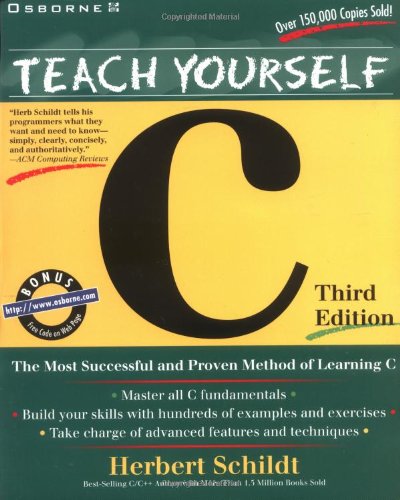
[B916.Ebook] Ebook Free Teach Yourself C, by Herbert Schildt

Ebook Free Teach Yourself C, by Herbert Schildt

Yeah, reviewing an e-book Teach Yourself C, By Herbert Schildt could include your friends listings. This is among the formulas for you to be effective. As recognized, success does not suggest that you have terrific things. Comprehending as well as understanding greater than other will provide each success. Beside, the message as well as impression of this Teach Yourself C, By Herbert Schildt could be taken and chosen to act.

Teach Yourself C, by Herbert Schildt

Teach Yourself C, by Herbert Schildt


Teach Yourself C, by Herbert Schildt

Ebook Free Teach Yourself C, by Herbert Schildt

New updated! The Teach Yourself C, By Herbert Schildt from the most effective author and author is currently readily available right here. This is guide Teach Yourself C, By Herbert Schildt that will make your day reviewing becomes finished. When you are looking for the printed book Teach Yourself C, By Herbert Schildt of this title in guide establishment, you may not find it. The problems can be the restricted editions Teach Yourself C, By Herbert Schildt that are given in guide establishment.

As one of the home window to open the new globe, this Teach Yourself C, By Herbert Schildt provides its remarkable writing from the writer. Published in among the popular publishers, this publication Teach Yourself C, By Herbert Schildt becomes one of one of the most desired publications recently. Actually, guide will certainly not matter if that Teach Yourself C, By Herbert Schildt is a best seller or not. Every book will constantly provide ideal resources to get the viewers all finest.

Nonetheless, some people will certainly seek for the very best vendor publication to check out as the initial reference. This is why; this Teach Yourself C, By Herbert Schildt is presented to satisfy your need. Some people like reading this book Teach Yourself C, By Herbert Schildt as a result of this preferred publication, but some love this as a result of preferred writer. Or, lots of likewise like reading this publication Teach Yourself C, By Herbert Schildt due to the fact that they really should read this book. It can be the one that truly love reading.

In getting this Teach Yourself C, By Herbert Schildt, you could not still go by strolling or riding your motors to guide shops. Get the queuing, under the rain or hot light, and still look for the unknown publication to be because book establishment. By seeing this page, you could only look for the Teach Yourself C, By Herbert Schildt and you could locate it. So now, this time around is for you to choose the download web link as well as purchase Teach Yourself C, By Herbert Schildt as your personal soft file publication. You could read this book Teach Yourself C, By Herbert Schildt in soft file only as well as wait as your own. So, you don't have to fast put guide Teach Yourself C, By Herbert Schildt into your bag anywhere.

Teach Yourself C, by Herbert Schildt

The first two editions of "Teach Yourself C" were Osborne best-sellers, together selling over 100,000 copes. "Teach Yourself C" uses a proven "mastery" learning approach to one of the most difficult languages to learn. The book is structured in such a way that it provides objectives, followed by minimal discussion, and concise examples; it tests the reader's understanding with multiple exercises (answers provided in the back of the book). The book first tests understanding of individual concepts and then tests understanding of a given topic in a larger setting. If the reader goes through this process, he/she will gain mastery of the fundamentals of the C language. Some readers will pick up concepts by simply reading the sections and occasionally pouring over examples; others will closely study all examples. Some will try the exercises. Others will learn by reading through the answer section and some will do all of the exercises. The reader is given different options to learn the material, and thus control how they learn C.

  • Sales Rank: #587643 in Books
  • Published on: 1997-04-01
  • Ingredients: Example Ingredients
  • Original language: English
  • Number of items: 1
  • Dimensions: 9.10" h x 1.71" w x 7.30" l,
  • Binding: Paperback
  • 640 pages

From the Back Cover

The Single Easiest Way to Learn C.

Best-selling programmer Herb Schildt has taught millions to program in today's most popular languages. Now in this third edition of the best-selling Teach Yourself C, his proven plan for success has been updated, expanded, and enhanced. There truly is no better way to learn C.

Written with Herb's uncompromising clarity and attention to detail, Teach Yourself C begins with the fundamentals, covers all the essentials, and concludes with a look at some of C's most advanced features. Along the way are plenty of practical examples, self-evaluation skill checks, and exercises. Answers to all exercises are at the back of the book, so you can easily check your progress.

Inside you will:

  • Learn the structure of a C program
  • Understand each of C's program control statements
  • Examine data types, variables, and expressions
  • Explore arrays and strings
  • Learn about pointers
  • Discover the power of functions
  • Use console and file I/O
  • Work with structures and unions
  • Explore advanced data types and operators
  • Gain insights into C's preprocessor
  • Learn how C can be used to create Windows programs

Best of all, you'll learn with Schildt's proven "mastery" method: the highly effective yet versatile approach that has helped millions become skilled programmers. This approach lets you work at your own pace, in your own way. Even if you have found C confusing in the past, Schildt's clear, paced presentation will make even advanced topics easy to understand.

Because C forms the basis of C++, after completing Teach Yourself C, you will have the necessary foundation to advance to C++. When it comes to teaching C, Herb Schildt has it down to a science. And in this revised and updated bestseller, he reveals the formula that will make you a C programmer -- the quickest, easiest, and most effective way possible.

About the Author
Herbert Schildt is a world leading programming author. He is an authority on the C, C++, Java, and C# programming languages, and a master Windows programmer. His programming books have sold more than three million copies worldwide and have been translated into all major foreign languages. He is the author of numerous best sellers including C: The Complete Reference, Java 2: The Complete Reference, Java 2: A Beginner's Guide, C#: A Beginner's Guide, and many more. Schildt holds a master's degree in computer science from the University of Illinois.

Most helpful customer reviews

0 of 0 people found the following review helpful.
Great book
By kelly lim
One of the cheapest books that I've purchased that helped me with my education! I use this for a programming class as an additional reading to the required one. It's a really easy read, and it's surprisingly easy to find contents that I'm looking for. The examples are a good guide to assure you of your understanding. It was worth the money for me and I have learned so much in the past month or so from just using this along with my class. Do note, this is definitely for the beginners level. I'm sure if you're already familiar with programming in C then you could look into another book (maybe by the same author/company?)
Overall, I'm satisfied with this purchase!

0 of 0 people found the following review helpful.
Good Book
By Duck
You can definitely learn C through this book, though I had trouble fully understanding some of the difficult sections, such as pointers. I haven't used other programming languages or other programming books, but this book explains C very well. If you don't have any idea of which programming book to choose, I recommend that you choose this book.

0 of 0 people found the following review helpful.
Great book and fast shipping
By USA
I would recoment this to anyone who would like to know about C programming eventhough you are in school. this book will tach you what you want to know about C.

See all 30 customer reviews...

Teach Yourself C, by Herbert Schildt PDF
Teach Yourself C, by Herbert Schildt EPub
Teach Yourself C, by Herbert Schildt Doc
Teach Yourself C, by Herbert Schildt iBooks
Teach Yourself C, by Herbert Schildt rtf
Teach Yourself C, by Herbert Schildt Mobipocket
Teach Yourself C, by Herbert Schildt Kindle

Teach Yourself C, by Herbert Schildt PDF

Teach Yourself C, by Herbert Schildt PDF

Teach Yourself C, by Herbert Schildt PDF

Sabtu, 15 Maret 2014

[U914.Ebook] Free PDF Aircraft Instruments, 2nd ed., by E H J Pallett

Free PDF Aircraft Instruments, 2nd ed., by E H J Pallett

When going to take the encounter or thoughts kinds others, book Aircraft Instruments, 2nd Ed., By E H J Pallett can be an excellent source. It's true. You could read this Aircraft Instruments, 2nd Ed., By E H J Pallett as the resource that can be downloaded right here. The means to download and install is also simple. You can check out the link page that our company offer then buy guide making an offer. Download Aircraft Instruments, 2nd Ed., By E H J Pallett and you could put aside in your very own device.

Aircraft Instruments, 2nd ed., by E H J Pallett

Aircraft Instruments, 2nd ed., by E H J Pallett


Aircraft Instruments, 2nd ed., by E H J Pallett

Free PDF Aircraft Instruments, 2nd ed., by E H J Pallett

Aircraft Instruments, 2nd Ed., By E H J Pallett. A task might obligate you to consistently improve the expertise as well as experience. When you have no sufficient time to enhance it directly, you can get the encounter as well as knowledge from checking out the book. As everyone understands, publication Aircraft Instruments, 2nd Ed., By E H J Pallett is very popular as the window to open the world. It implies that reading book Aircraft Instruments, 2nd Ed., By E H J Pallett will give you a brand-new means to locate everything that you require. As the book that we will certainly provide here, Aircraft Instruments, 2nd Ed., By E H J Pallett

Why need to be Aircraft Instruments, 2nd Ed., By E H J Pallett in this site? Get much more earnings as what we have informed you. You could discover the other relieves besides the previous one. Reduce of getting guide Aircraft Instruments, 2nd Ed., By E H J Pallett as exactly what you want is additionally supplied. Why? Our company offer you many type of guides that will certainly not make you really feel weary. You could download them in the web link that we supply. By downloading Aircraft Instruments, 2nd Ed., By E H J Pallett, you have taken the right way to pick the ease one, compared with the inconvenience one.

The Aircraft Instruments, 2nd Ed., By E H J Pallett oftens be wonderful reading book that is understandable. This is why this book Aircraft Instruments, 2nd Ed., By E H J Pallett becomes a preferred book to check out. Why don't you want become one of them? You could take pleasure in checking out Aircraft Instruments, 2nd Ed., By E H J Pallett while doing other tasks. The existence of the soft data of this book Aircraft Instruments, 2nd Ed., By E H J Pallett is type of getting encounter quickly. It includes exactly how you ought to conserve the book Aircraft Instruments, 2nd Ed., By E H J Pallett, not in racks obviously. You could wait in your computer tool as well as gizmo.

By conserving Aircraft Instruments, 2nd Ed., By E H J Pallett in the gadget, the means you review will certainly also be much less complex. Open it as well as start reviewing Aircraft Instruments, 2nd Ed., By E H J Pallett, basic. This is reason we propose this Aircraft Instruments, 2nd Ed., By E H J Pallett in soft data. It will certainly not disturb your time to get guide. Additionally, the on the internet air conditioner will certainly also reduce you to browse Aircraft Instruments, 2nd Ed., By E H J Pallett it, even without going somewhere. If you have link net in your workplace, house, or gizmo, you could download and install Aircraft Instruments, 2nd Ed., By E H J Pallett it directly. You may not also wait to get guide Aircraft Instruments, 2nd Ed., By E H J Pallett to send by the vendor in various other days.

Aircraft Instruments, 2nd ed., by E H J Pallett

  • Published on: 2009
  • Binding: Paperback

Most helpful customer reviews

See all customer reviews...

Aircraft Instruments, 2nd ed., by E H J Pallett PDF
Aircraft Instruments, 2nd ed., by E H J Pallett EPub
Aircraft Instruments, 2nd ed., by E H J Pallett Doc
Aircraft Instruments, 2nd ed., by E H J Pallett iBooks
Aircraft Instruments, 2nd ed., by E H J Pallett rtf
Aircraft Instruments, 2nd ed., by E H J Pallett Mobipocket
Aircraft Instruments, 2nd ed., by E H J Pallett Kindle

Aircraft Instruments, 2nd ed., by E H J Pallett PDF

Aircraft Instruments, 2nd ed., by E H J Pallett PDF

Aircraft Instruments, 2nd ed., by E H J Pallett PDF

Rabu, 05 Maret 2014

[K275.Ebook] Free PDF Black Rain, by Masuji Ibuse

Free PDF Black Rain, by Masuji Ibuse

As one of guide compilations to propose, this Black Rain, By Masuji Ibuse has some solid reasons for you to read. This book is really ideal with exactly what you need currently. Besides, you will additionally love this publication Black Rain, By Masuji Ibuse to check out because this is one of your referred books to review. When getting something brand-new based on experience, entertainment, and also other lesson, you could utilize this book Black Rain, By Masuji Ibuse as the bridge. Beginning to have reading habit can be gone through from different methods and from alternative types of publications

Black Rain, by Masuji Ibuse

Black Rain, by Masuji Ibuse


Black Rain, by Masuji Ibuse

Free PDF Black Rain, by Masuji Ibuse

Utilize the innovative technology that human develops this day to locate guide Black Rain, By Masuji Ibuse quickly. But initially, we will ask you, just how much do you like to review a book Black Rain, By Masuji Ibuse Does it always up until finish? Wherefore does that book review? Well, if you really enjoy reading, try to check out the Black Rain, By Masuji Ibuse as one of your reading collection. If you only checked out the book based upon requirement at the time as well as incomplete, you need to try to like reading Black Rain, By Masuji Ibuse first.

The reason of why you can receive and get this Black Rain, By Masuji Ibuse sooner is that this is guide in soft file type. You can review the books Black Rain, By Masuji Ibuse wherever you want also you remain in the bus, workplace, house, and other places. But, you might not should relocate or bring the book Black Rain, By Masuji Ibuse print anywhere you go. So, you will not have bigger bag to lug. This is why your option making better principle of reading Black Rain, By Masuji Ibuse is actually helpful from this case.

Knowing the method the best ways to get this book Black Rain, By Masuji Ibuse is additionally useful. You have been in best site to begin getting this details. Obtain the Black Rain, By Masuji Ibuse link that we provide right here and also see the link. You can order guide Black Rain, By Masuji Ibuse or get it as soon as possible. You can rapidly download this Black Rain, By Masuji Ibuse after obtaining deal. So, when you require guide quickly, you can directly receive it. It's so simple and so fats, isn't it? You need to prefer to by doing this.

Just link your gadget computer or gadget to the internet connecting. Get the modern-day innovation to make your downloading Black Rain, By Masuji Ibuse completed. Also you do not want to check out, you can directly close guide soft documents and also open Black Rain, By Masuji Ibuse it later on. You could additionally effortlessly get the book almost everywhere, considering that Black Rain, By Masuji Ibuse it remains in your gizmo. Or when remaining in the office, this Black Rain, By Masuji Ibuse is also suggested to review in your computer system gadget.

Black Rain, by Masuji Ibuse

]Black Rain is centered around the story of a young woman who was caught in the radioactive "black rain" that fell after the bombing of Hiroshima. lbuse bases his tale on real-life diaries and interviews with victims of the holocaust; the result is a book that is free from sentimentality yet
manages to reveal the magnitude of the human suffering caused by the atom bomb. The life of Yasuko, on whom the black rain fell, is changed forever by periodic bouts of radiation sickness and the suspicion that her future children, too, may be affected.
lbuse tempers the horror of his subject with the gentle humor for which he is famous. His sensitivity to the complex web of emotions in a traditional community torn asunder by this historical event has made Black Rain one of the most acclaimed treatments of the Hiroshima story.

  • Sales Rank: #1943454 in Books
  • Brand: Brand: Bantam
  • Published on: 1985-06-01
  • Released on: 1985-06-01
  • Original language: Japanese
  • Number of items: 1
  • Binding: Mass Market Paperback
  • 304 pages
Features
  • Used Book in Good Condition

Review

.]"This painful and very beautiful book gives two powerful messages-of drastic warning, yet also of affirmation of life." - John Hersey
"The most successful book yet written about the greatest single horror inflicted by one group of men upon another." -Sunday Times
"Immensely effective.... This is a book which must be read." -Books and Bookmen
"I would recommend Black Rain to every reader, even the squeamish." -Spectator
"Its subtle ironies and noble, unsentimental pity are a reminder of the strengths of Japanese fiction." -New Statesman

Language Notes
Text: English, Japanese (translation)

About the Author

MASUJI IBUSE was born in Kamo, Hiroshima Prefecture, in 1898. He majored in French at Waseda University and joined the School of Fine Arts to pursue a serious interest in painting. His first story, "Salamander," was published in 1923, when Ibuse was still a student, and by the early 1930s his eloquent use of dialect and his unique prose style had established him as one of the leading figures in the Japanese literary world. In the years since 1938 he has been awarded almost every literary prize in Japan, and on the publication of Black Rain (1966) Ibuse was presented with both the Cultural Medal and Japan's highest literary award, the Noma Prize. Black Rain has been translated into eleven foreign languages.

Most helpful customer reviews

6 of 6 people found the following review helpful.
Phenomenology of destruction
By H. Schneider
Every once in a while I find a book that surprises me.
I had bought Ibuse's Black Rain upon recommendation from the remarkable Kenzaburo Oe. I expected something like a documentary novel about Hiroshima, maybe like John Hersey's book about that subject.

What I found is a unique work of art on top of the documentary. We have here a complete tale of life in war before the bomb and in peace after the bomb. Not to forget the transition phase of uncertainty and disorientation.
The narration is set a few years after August 6, 1945. A family of survivors lives a simple life of daily routines and remembrances. The man in the house had written a diary on the day of the bomb and the following days. He copies the original text and adds further memories. He asks his wife to add a text on food during the war. The act of writing is as much a subject as the act of living in the presence and remembering the life of the past. The writing is done for the sake of a local library which had asked for it.

The real focus of human interest is not the mass killing. We can't be moved, really, by hundreds of thousands. We need individuals. We have the small family of 3. We have Yasuko, the main man's niece, who lives with uncle and aunt, and has lived there during the bombing. She is young and attractive and suspect. Does she have radiation disease? Can she bear a son? Can one marry her? The uncle's heart is near breaking point. Nobody knows the truth. Rumors have the girl at totally wrong places, but knowledge of the right places would not guarantee health.

The novel delves into amazing detail. It is a cook book for famine times. It gives recipes for aquaculture under monopoly administration. It tells us how a man with radiation sickness can spend his time productively without overexertion.
The diary describes the phenomena of the bomb's effects (the clouds, the light, the fires, the injuries, the corpses, the decomposition etc) with attention to much detail, but with total ignorance about the kind of weapon that has been used. Hindsight does not blur this. This uncertainty is a main driver of the tale.
We learn about conflicts between bureaucracy, military and civilians. We watch the total collapse of organization after the bomb, but we see no descent into barbarity by the survivors. Decency and civility are maintained. Well, apart from some minor transgressions like theft of provisions. And yet: it takes a century, thinks the narrator, to repair the moral damage done to the population in an area badly ravaged by war.
(This simple truth seems easily forgotten by contemporary invaders of foreign countries.)

What to do with corpses of people who die of their injuries and diseases after the bomb? Death certificates? Burials? Our narrator gets conscripted as temporary scripture reader at funerals. He learns to appreciate the Buddhist texts that have been given to him by a monk for the purpose. He memorizes the Sermon on Mortality.

A superb early scene: on the morning of the bomb, help units are dispatched into town; the headman sees them off with patriotic bombast about spirit of war and keeping their bamboo spears as symbols; on the way, they make a lunch break at a farm house; during the break they hear a speech on the radio, We do not learn what the speech is, but the men drop their spears when they continue their march.

How can a book with this subject avoid melodrama, monotony, sentimentality, and all the other pitfalls of the subject? That's what the translator asks in his introduction.
Good question. Ibuse did it. The tone and sense of humor is the greatest surprise in this book. A miracle of counter-intuitive writing.

4 of 4 people found the following review helpful.
Kindle version of Black Rain
By Raven
This is the most beautiful and most sad thing I've ever read. I literally had no idea.

Thankfully, the author does not preach about the evils of what happened. Rather, Black Rain simply describes what it was like for a few of the survivors of Hiroshima. It includes the events of that black day in 1945, but also talks about what happened to the people next; how their lives were effected by the radiation sickness and even worse. The stigma of being at Hiroshima ruined their future. You would think they had suffered enough without the addition of such harmful gossip from their fellow countrymen.

It's very hard to see where the lines between fiction and non-fiction are in this book, but to me, that's what makes it so great.

The kindle version has an interactive table of contents, and one can easily navigate between the chapters using the 5-way controller.

0 of 0 people found the following review helpful.
this book...
By Kadijah
This was a book that didn't want to make me vomit really, I couldn't envision a lot of the things like I usually do when I read books, but I think I was sub consciously trying not to as this was a touchy topic for me. It took me tree days to finish this book I think because I kept looking for things regarding the bombings and getting into debates whether or not it was true, etc; I really liked this book, made me cry especially when children were mentioned, I wish I knew what happened with Yasuko, the ending SPOILER SPOILER SPOILER made it seem as if she died, so left to my imaginative devices I just kept her alive. Great book Masuji-dono.

See all 55 customer reviews...

Black Rain, by Masuji Ibuse PDF
Black Rain, by Masuji Ibuse EPub
Black Rain, by Masuji Ibuse Doc
Black Rain, by Masuji Ibuse iBooks
Black Rain, by Masuji Ibuse rtf
Black Rain, by Masuji Ibuse Mobipocket
Black Rain, by Masuji Ibuse Kindle

Black Rain, by Masuji Ibuse PDF

Black Rain, by Masuji Ibuse PDF

Black Rain, by Masuji Ibuse PDF